GO BEYOND BEAUTY
  • Home
  • About
    • About Go Beyond Beauty
    • Frequently Asked Questions
  • Species List
    • All GBB Species
    • Species Profiles >
      • Japanese Barberry
      • Invasive Bittersweet
      • Glossy Buckthorn
      • Baby's Breath
      • Dame's Rocket
      • Blue Lyme Grass
      • Non-native Bush Honeysuckles
      • Japanese Honeysuckles
      • Moneywort/Creeping Jenny
      • Reed Canary Grass
      • Common Buckthorn
      • Callery Pear
      • Water Hyacinth
      • Water Lettuce
  • GBB Regional Hubs
    • Find Your Hub
    • Participating Hub Information >
      • NW MI Invasive Species Network
      • Central MI CISMA
      • Friends of the St. Clair River
      • CAKE CISMA
      • KISMA
      • OC CISMA
      • GiLLS CISMA
      • JLW CISMA
    • Becoming a Go Beyond Beauty Hub
  • Resources
    • Invasive Species Disposal
    • MI Invasive Species Management Areas
    • Online and Physical Resources
  • Social Media
    • Facebook
    • Instagram
  • Contact
Dame's Rocket
Hesperis matronalis
A biennial or short-lived perennial, dame's rocket is a close family relative of garlic mustard. Therefore, the appearance and growth between the two is quite similar. Eventually reaching a height of 2-3 feet, first year plants overwinter as an evergreen rosette. 

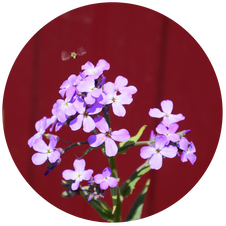
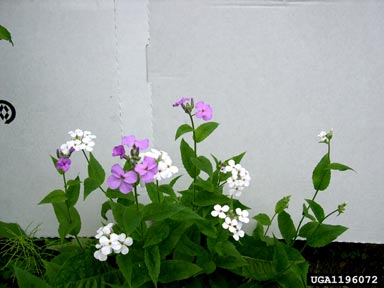
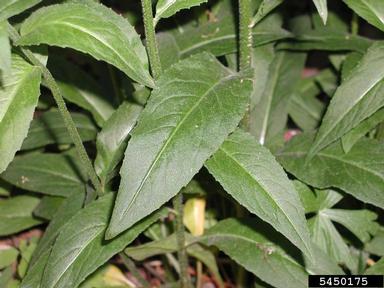
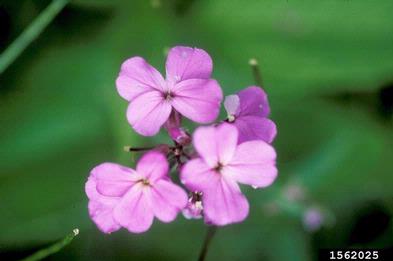
Simple and alternate leaves grow along a straight stem which culminates in four-petaled blooms. The flowers show in late May through mid-July. Bloom colors can range from pink and purple to white. Keep in mind dame's rocket has a native look-a-like. Native phlox looks very similar but blooms have five petals, rather than four. 

Introduced for ornamental purposes from Europe, dame's rocket can be quite aggressive in areas that receive more sunlight. It also prefers slightly moist and well-drained soils. 
Bloom colors range from pink to white to purple.
Dame's rocket leaves are elongated and slightly serrated.
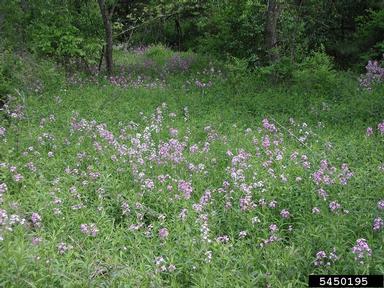
A dame's rocket infestation.
Blooms have four distinct petals.
Photo credits: Mark Frey, The Presidio Trust , Bugwood.org | Leslie J. Mehrhoff, University of Connecticut, Bugwood.org | Tom Heutte, USDA Forest Service, Bugwood.org
Learn More About Dame's Rocket:

  • Michigan Invasive Species Information Network

Picture
Disposal Options
Dame's Rocket Facts
Picture
  • A common addition to wildflower seed packets. 
  • Each plant is capable of producing thousands of seeds which aids in its ability to rapidly spread. ​

Management Options
  • Hand pulling can produce successful results!
    • Plants must be pulled before they go to seed or efforts will simply result in additional spread. 
    • Try to remove the entire root system or it will likely resprout. 
    • Efforts should continue for multiple years as seeds will persist in the seed bank. 
About Go Beyond Beauty
Created by the Northwest Michigan Invasive Species Network
Contact us:
Inquiries
(231) 299-0805
​
Picture
Picture
Go Beyond Beauty is funded in part by the Michigan Invasive Species Grant Program (MISGP) and the Richard King Mellon Foundation.
  • Home
  • About
    • About Go Beyond Beauty
    • Frequently Asked Questions
  • Species List
    • All GBB Species
    • Species Profiles >
      • Japanese Barberry
      • Invasive Bittersweet
      • Glossy Buckthorn
      • Baby's Breath
      • Dame's Rocket
      • Blue Lyme Grass
      • Non-native Bush Honeysuckles
      • Japanese Honeysuckles
      • Moneywort/Creeping Jenny
      • Reed Canary Grass
      • Common Buckthorn
      • Callery Pear
      • Water Hyacinth
      • Water Lettuce
  • GBB Regional Hubs
    • Find Your Hub
    • Participating Hub Information >
      • NW MI Invasive Species Network
      • Central MI CISMA
      • Friends of the St. Clair River
      • CAKE CISMA
      • KISMA
      • OC CISMA
      • GiLLS CISMA
      • JLW CISMA
    • Becoming a Go Beyond Beauty Hub
  • Resources
    • Invasive Species Disposal
    • MI Invasive Species Management Areas
    • Online and Physical Resources
  • Social Media
    • Facebook
    • Instagram
  • Contact